Mohammad Fahim
A dynamic packaging API bundles flights, hotels, and cars into one live price. It builds the package in real time, from many suppliers, at the moment of search. As a result, travelers book a full trip in one step, often at a better price. Moreover, you earn more per booking and hide the per-item cost. In this guide, you will learn how a dynamic packaging API works and how to connect one.
Packages are how big travel brands lift margin. However, building them by hand is slow and rigid. A dynamic packaging API makes it automatic.
What Is a Dynamic Packaging API?
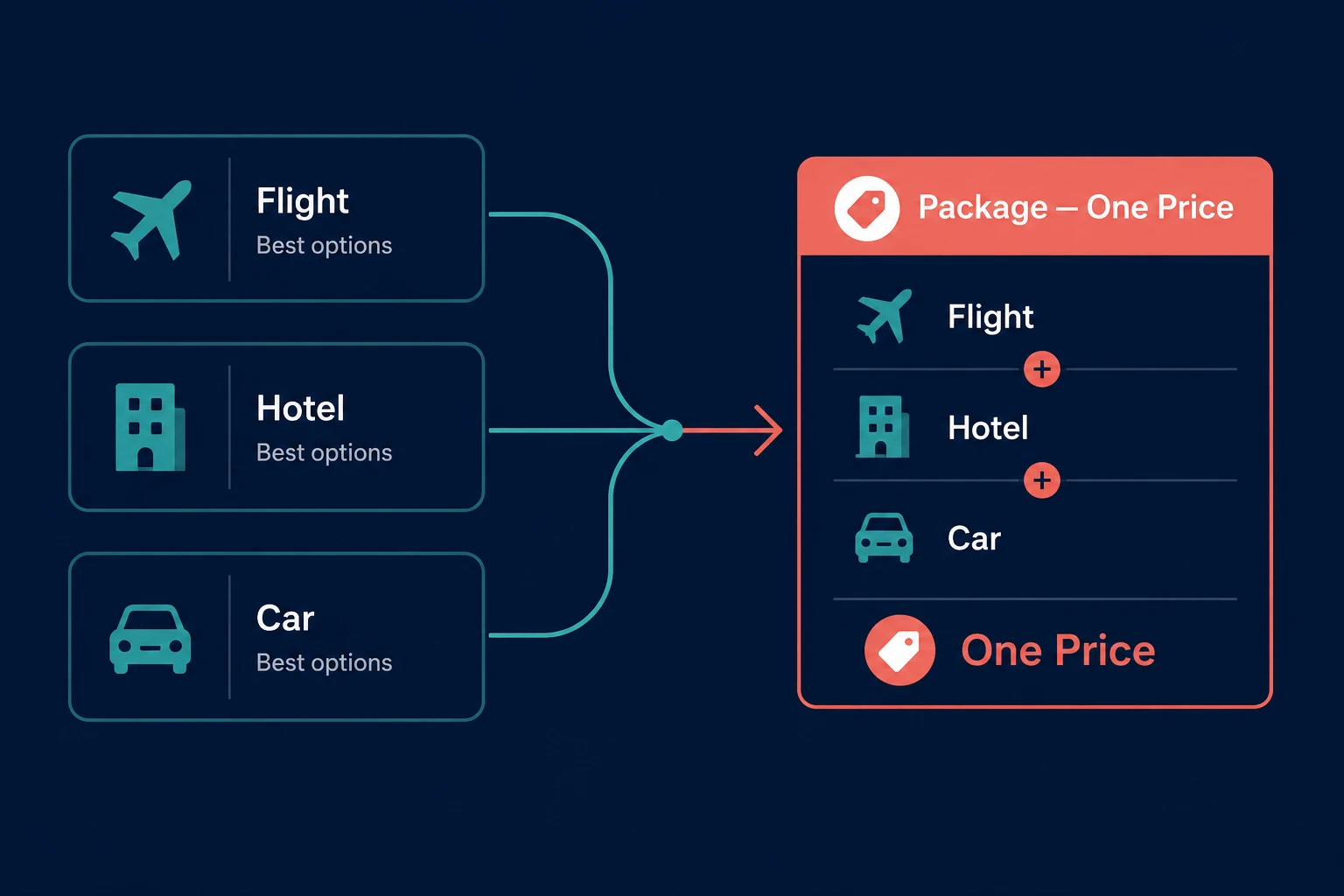
A dynamic packaging API builds travel packages in real time. It pulls a flight, a hotel, and a car from live inventory and prices them as one. An application programming interface (API) simply lets two systems talk to each other.
Dynamic packaging differs from old fixed packages. Old packages were pre-set deals that rarely changed. Dynamic packages are built fresh for each search. Therefore, every traveler can get a package that fits their exact trip.
This sits on top of your other products. You already sell flights and hotels alone. Packaging combines them into one higher-value sale. Specifically, it turns three small bookings into one bigger one.
How a Dynamic Packaging API Works
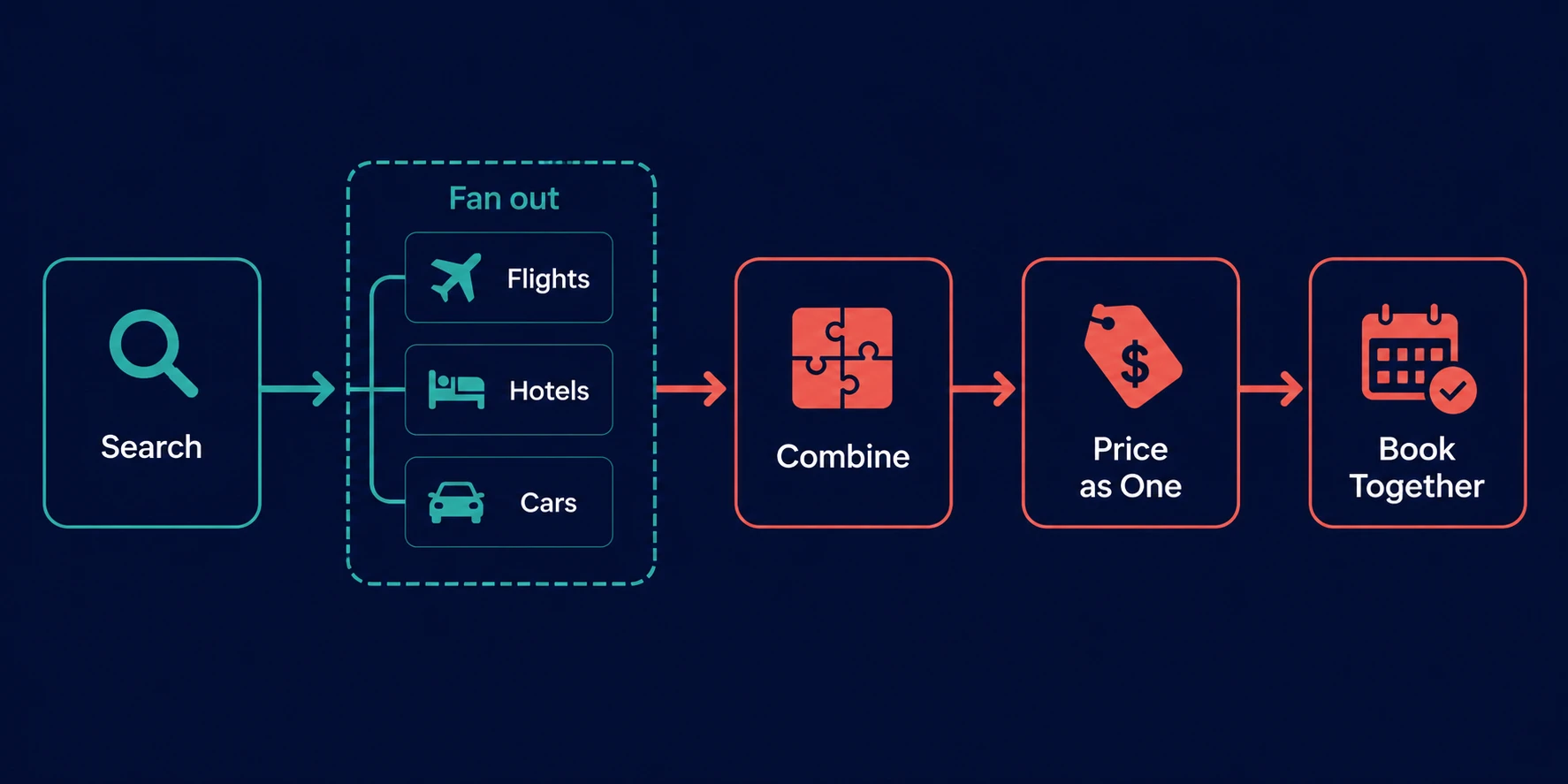
The flow joins several products into one result. Here is the basic sequence.
- Search — the traveler enters a destination, dates, and travelers.
- Fan out — the API searches flights, hotels, and cars at once.
- Combine — it builds valid combinations that match the trip.
- Price as one — it sums the items and applies any package margin or discount.
- Show the bundle — the traveler sees one price for the whole trip.
- Book together — one checkout confirms every item.
The key trick is the single price. The traveler does not see each item’s cost. Therefore, you can blend margin across the bundle. This is why packaged trips protect your pricing.
It builds on the same parts you already use: a flight booking API and hotel API integration. Packaging just combines them at search time.
Why Use a Dynamic Packaging API
Packaging is one of the strongest margin tools in travel. Here is what you gain.
- Higher margin: blend prices so single-item discounts are hidden.
- Bigger basket: sell three products in one checkout, not one.
- Price protection: travelers cannot easily compare each item.
- Better experience: one trip, one price, one booking.
- More upsells: add activities, transfers, or insurance to the bundle.
Packaged trips often carry margins of 10-20%, higher than single flights. As a result, even a small package attach rate can lift total profit. This is why most large OTAs push packages hard.
Common Challenges to Watch
Packaging is powerful but complex. Know these pitfalls before you connect.
- Many combinations: one search can create thousands of options to rank.
- Speed: searching many products at once must stay fast.
- Availability sync: all items must still be bookable at checkout.
- One booking, many suppliers: if one item fails, the package must roll back.
- Cancellation rules: each item has its own refund terms to merge.
The hardest part is the single booking step. All items must confirm together, or none should. Therefore, strong error handling and rollback are essential.
How to Connect a Dynamic Packaging API
You have two main paths. The right one depends on your size and product mix.
Option 1: Build packaging on direct connections
You can connect each product directly, then build the packaging logic yourself. This gives full control. However, you must integrate flights, hotels, and cars separately first. Then you build the combine-and-price engine on top. This path is slow and suits large teams.
Option 2: Use an aggregator
An aggregator gives you flights, hotels, and cars through one API. So the products are already in one place and one format. As a result, building packages is far simpler and faster. This is the same model behind multi-supplier travel inventory.
The basic steps to connect are simple:
- Sign with a provider and get sandbox keys.
- Test flight, hotel, and car search together.
- Build the combine-and-price rules.
- Add a single checkout with rollback.
- Go live and watch the package attach rate.
Final Thoughts
A dynamic packaging API is one of the best ways to lift travel margin. It bundles flights, hotels, and cars into one live price and one booking. However, the combine-and-price logic and single checkout are complex. Therefore, most platforms connect through an aggregator. It puts every product in one API, so packaging is fast to build.
Tripgic connects flights, hotels, cars, activities, and more through one unified API, ready for packaging. Want to sell bundled trips without the heavy build?